


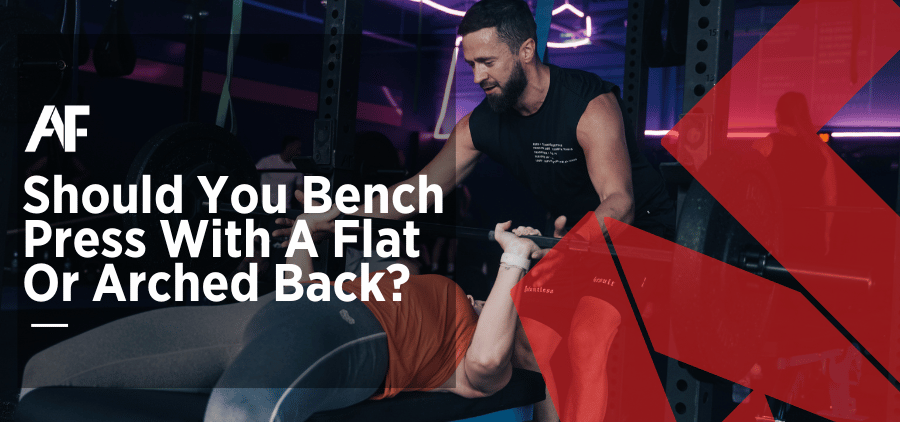
When it comes to bench pressing, it's common to see experienced lifters arching their backs. This technique isn’t just about showing off flexibility; it serves a specific purpose. An arched back can help create a more stable base, engage more muscle groups, and even reduce the range of motion, allowing lifters to push heavier weights safely and effectively.
By lifting their chest and retracting their shoulder blades, lifters can protect their shoulders and achieve better leverage. This positioning can be particularly beneficial for those aiming to maximize their strength and performance in competitive powerlifting.
But not everyone agrees…
Quick answer
For most people training for general strength and muscle, a slight, controlled arch with your shoulder blades pulled back is fine and helps protect the shoulders. A 2024 study of trained lifters found an arched back let them lift about 4 kg more on average, while a flat back moved the bar further and faster, and chest activation was similar with both. Use an arch if you want to lift the most weight; use a flatter back if you want more range of motion.
Updated November 2026
The Debate: Is an Arched Back Safe?
Despite its popularity among seasoned athletes, arching the back during bench press has been a point of contention. Critics argue that an exaggerated arch can place undue stress on the spine, potentially leading to injury. The concern is that improper technique or lack of mobility can cause the lower back to bear the brunt of the pressure, increasing the risk of pain or injury.
On the other hand, supporters say that when it's done with control, an arched position is safe. Powerlifting rules allow an arch as long as the lifter's head, shoulders and buttocks stay on the bench and their feet stay flat on the floor. The key is that the arch comes mainly from the upper back and squeezed shoulder blades, not from forcing the lower back.
What Does the Latest Research Say?
The clearest recent evidence comes from a 2024 study in the Journal of Strength and Conditioning Research by Bartolomei and colleagues. Fifteen highly trained lifters, most of them powerlifters, performed the bench press with a flat back and with an arched back at 50%, 70% and 90% of their one-rep max. The researchers measured how far and how fast the bar moved, and how hard the chest and triceps worked.
Here's what they found:
- More weight with an arch. The lifters' one-rep max was about 4.2 kg higher with an arched back.
- More range of motion with a flat back. The bar travelled further at every load with a flat back.
- Faster bar speed with a flat back. Average and peak bar speed were both higher with a flat back, but power output was the same.
- Similar chest activation. The upper and lower chest worked about as hard in both styles. The triceps tended to work slightly harder with an arch.
In short, the arch shortens the distance the bar travels, which is why lifters can handle more weight. A flat back makes each rep longer, which may suit people training for muscle and general strength rather than a competition total.
The study didn't measure lower-back load or injury risk, so it doesn't settle the safety question. If you do arch, keep it controlled, drive it from your upper back and shoulder blades, and stay within your rules if you compete.
Source: Bartolomei S, Caroli E, Coloretti V, Rosaci G, Cortesi M, Coratella G. Flat-Back vs. Arched-Back Bench Press: Examining the Different Techniques Performed by Power Athletes. Journal of Strength and Conditioning Research, 2024. DOI: 10.1519/JSC.0000000000004778.
The Importance of the Right Equipment
Regardless of your preferred bench press style, using the right equipment is essential for safety and performance. A sturdy, well-designed weightlifting bench provides the necessary support and stability to ensure you maintain proper form throughout your workout. Whether you’re bench pressing with a flat or arched back, the quality and features of your bench can significantly impact your training.
At Again Faster, we offer a range of weight benches that cater to different needs and training levels. Our flat and adjustable benches are built to support a variety of exercises, helping you target the muscle groups you want to develop.
The Team Series benches provide a robust, affordable option for everyday training, while our Competition Series offers elite-level stability and durability for serious lifters. With a weight-bearing capacity to match your strength training goals, these benches are designed to keep you safe and supported no matter how you press.
Discover which bench is right for your workout goals in our in-depth weight bench guide.
Flat or arched back bench press: FAQs
Is arching your back on bench press bad?
Not if it's controlled. A moderate arch driven by your upper back and shoulder blades is widely used and lets you lift more. Avoid forcing your lower back into an extreme position, and back off if you feel pain.
Does arching your back make bench press easier?
It shortens the distance the bar travels. In the 2024 study, trained lifters lifted about 4 kg more on average with an arch.
Is a flat back better for building chest muscle?
Chest activation was similar in both styles. A flat back gives a longer range of motion, which some lifters prefer for muscle-building work.
Is an arch allowed in powerlifting?
Usually, as long as your head, shoulders and buttocks stay on the bench and your feet stay flat. Federations set their own rules, so check yours before you compete.
Happy lifting!
Shop the equipment in this article: weight benches, power racks and bench press sets.