Quick answer
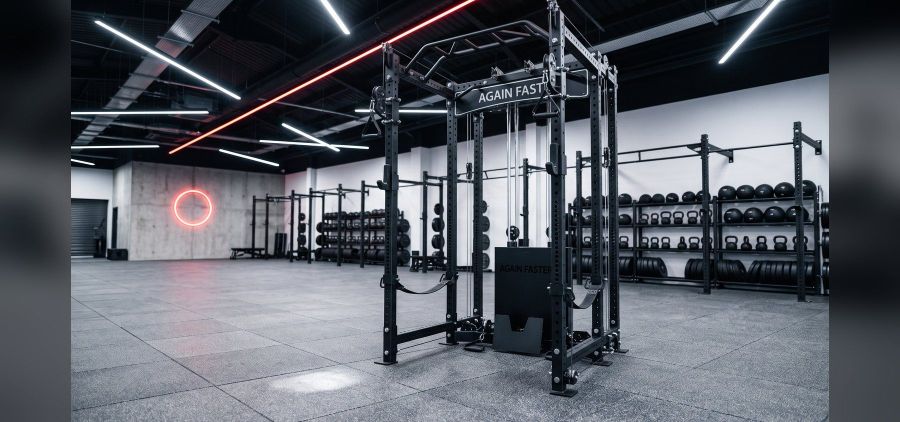
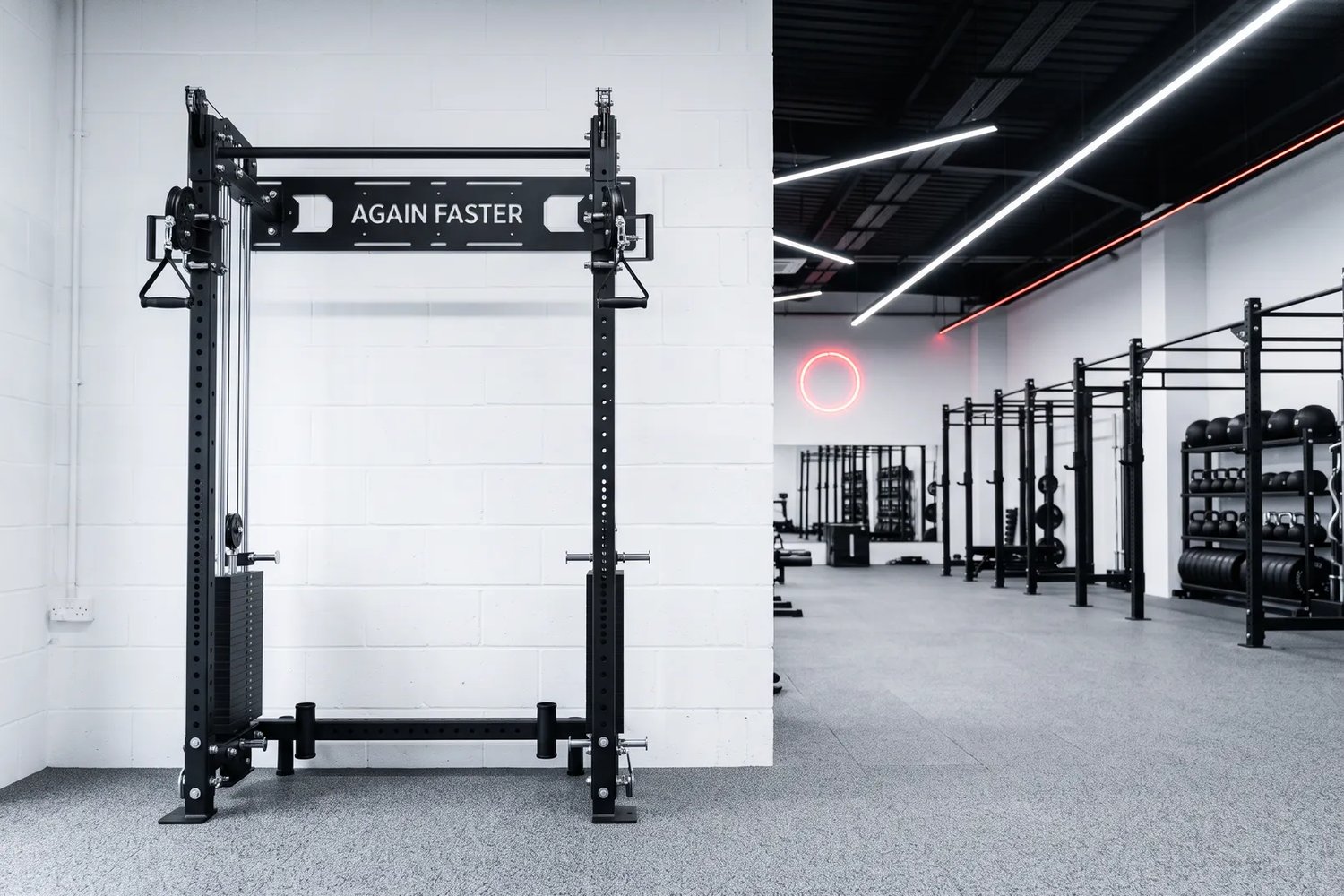
A functional trainer power rack puts a barbell rack and a selectorised cable station in one frame. All three Again Faster® REIGN versions have two 90kg stacks on a 2:1 ratio, so up to 45kg at each handle in 2.25kg steps. Pick the Functional Trainer Power Rack for the smallest freestanding footprint (810mm deep), the Rear Functional Trainer Rack for a lat pulldown and a clear rack front (1487mm deep), or the Wall-Mounted Cable Rack if you already have a rack and only need cables (629mm deep, solid wall).
Updated November 2026
In this guide
What is a functional trainer power rack?
It goes by a lot of names: a power rack with cables, a cable rack, a weight stack rack or a DAP (dual adjustable pulley) rack. They all mean a rack with selectorised weight stacks and height-adjustable pulleys, so you can squat, bench and press, then move the pin and go straight into rows, flyes and pressdowns without loading a plate.
The main designs are:
- Stacks in the sides of the rack. The most compact freestanding option.
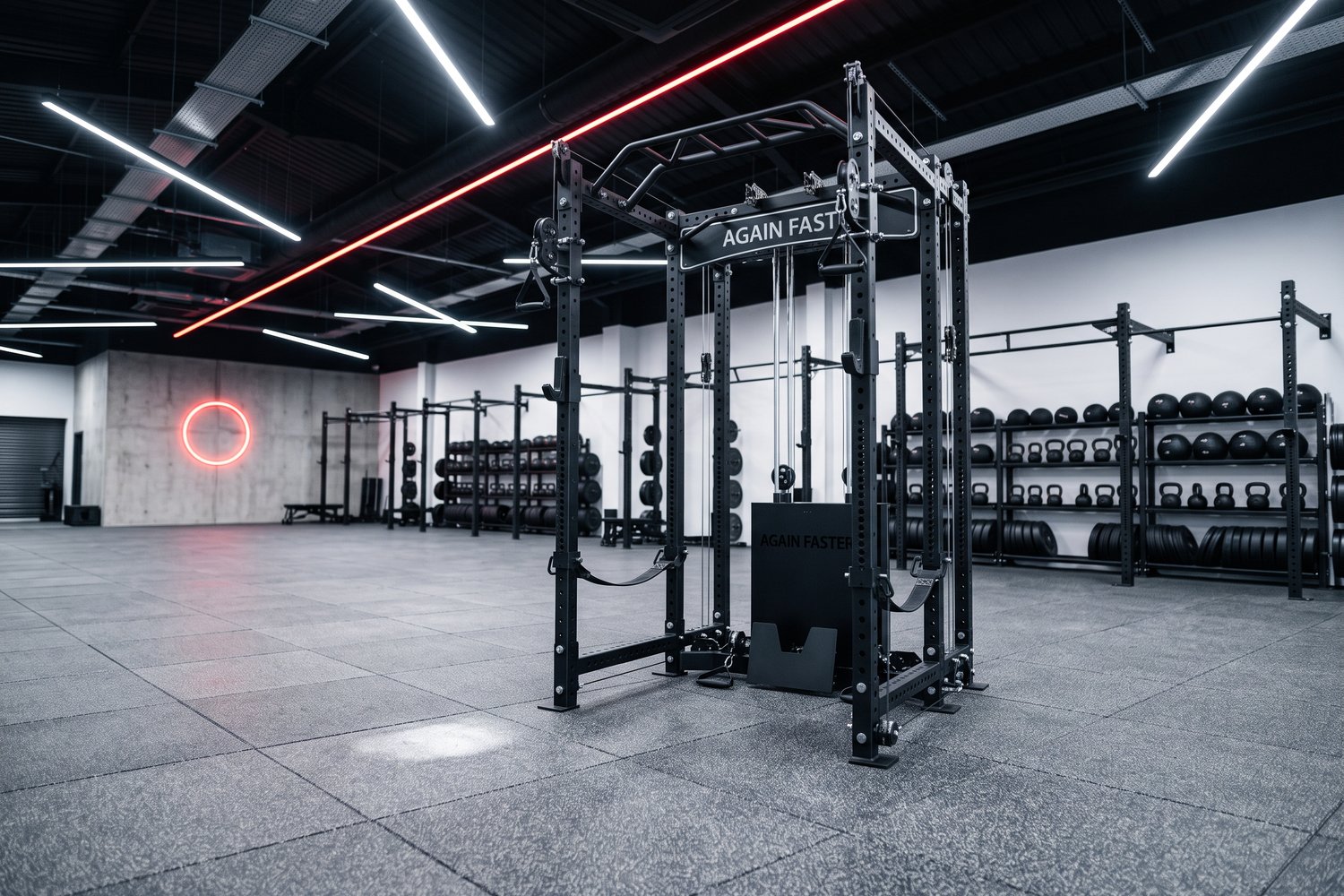
- Stacks behind the rack. A six-post frame with a rear bay. Deeper, but the rack front stays clear.
- Bolt-on stack kits. Added to the sides of an existing rack, which makes it wider and takes up uprights you use for barbell work.
- All-in-one trainers with a Smith machine. More moving parts, and a guided bar you may never use.
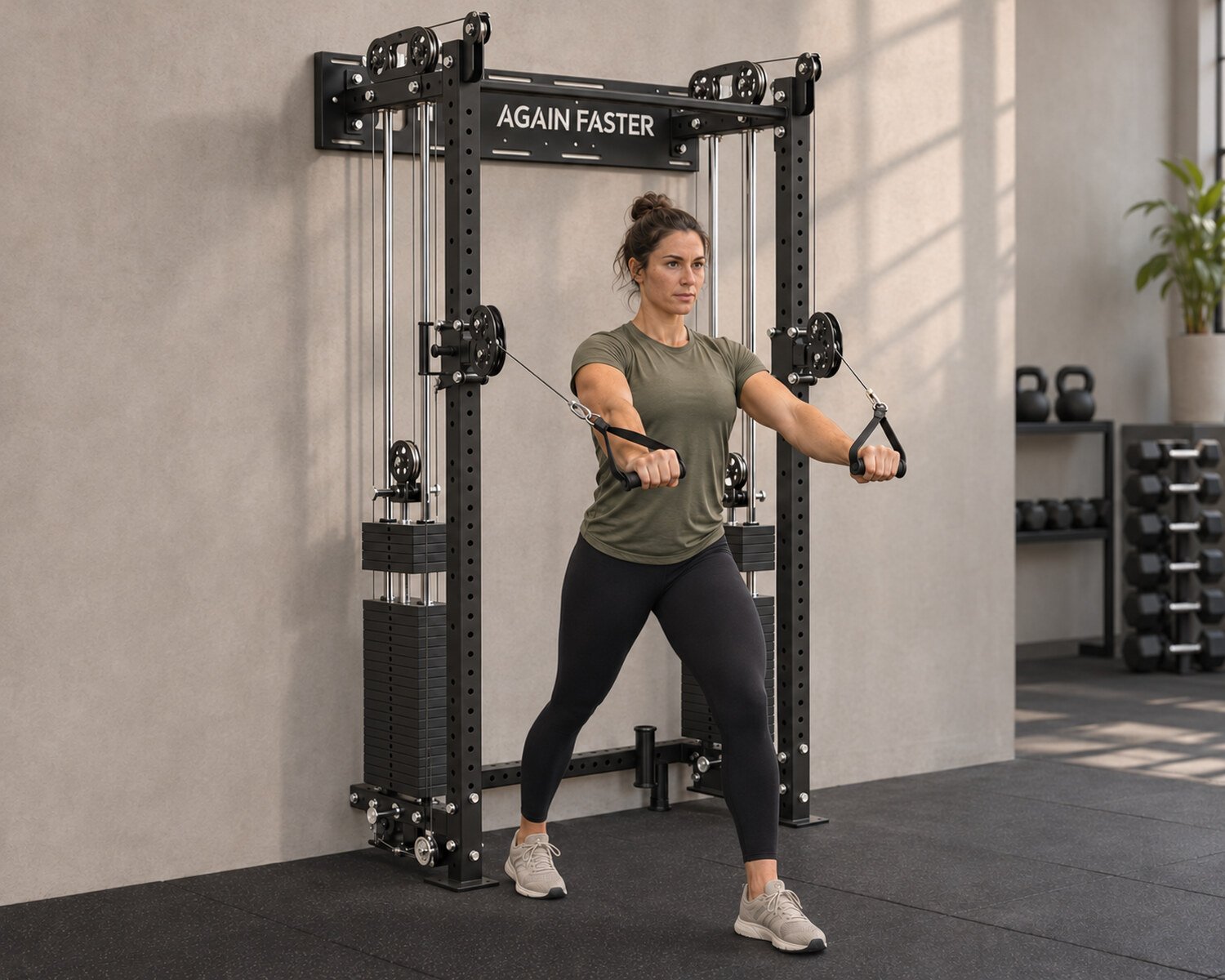
- Wall-mounted cable racks. Cables only, for gyms that already have a rack.
The REIGN range covers the first, second and last of these.
The three REIGN cable racks compared
| Functional Trainer Power Rack | Rear Functional Trainer Rack | Wall-Mounted Cable Rack | |
|---|---|---|---|
| Footprint (W x D) | 1340 x 810mm | 1340 x 1487mm | 1340 x 629mm |
| Height | 2153mm (2210mm at top pulleys) | 2153mm | 2209mm |
| Barbell rack | Half rack, J-cups | Six-post, J-hooks, spotter straps | None (barbell storage only) |
| Stacks | In the sides of the rack | Rear bay, behind a shroud | One per upright, on the wall |
| Cable stations | Two adjustable pulleys | Lat pulldown plus front pulleys | Two adjustable pulleys |
| Pulleys and cables | Double ball-bearing V-groove pulleys, plastic-coated steel cables | Aluminium pulleys on bearings, 4.8mm TPU cables rated to 900kg | Aluminium pulleys on bearings, 4.8mm TPU cables rated to 900kg |
| Fixing | Bolt to a solid, level floor | Bolt to a solid floor (bolts included) | Solid masonry or concrete wall (anchors not included) |
| Best for | Rack and cables in the smallest freestanding footprint | A complete setup with a clear rack front | Adding cables to a gym that has a rack |
Functional Trainer Power Rack
- Footprint
- 1340 x 810mm
- Height
- 2153mm (2210mm at top pulleys)
- Rack
- Half rack, J-cups
- Stacks
- In the sides of the rack
- Cables
- Two adjustable pulleys
- Fixing
- Bolt to a solid, level floor
- Best for
- Rack and cables in the smallest freestanding footprint
Rear Functional Trainer Rack
- Footprint
- 1340 x 1487mm
- Height
- 2153mm
- Rack
- Six-post, J-hooks, spotter straps
- Stacks
- Rear bay, behind a shroud
- Cables
- Lat pulldown plus front pulleys
- Fixing
- Bolt to a solid floor (bolts included)
- Best for
- A complete setup with a clear rack front
Wall-Mounted Cable Rack
- Footprint
- 1340 x 629mm
- Height
- 2209mm
- Rack
- None (barbell storage only)
- Stacks
- One per upright, on the wall
- Cables
- Two adjustable pulleys
- Fixing
- Solid masonry or concrete wall (anchors not included)
- Best for
- Adding cables to a gym that has a rack
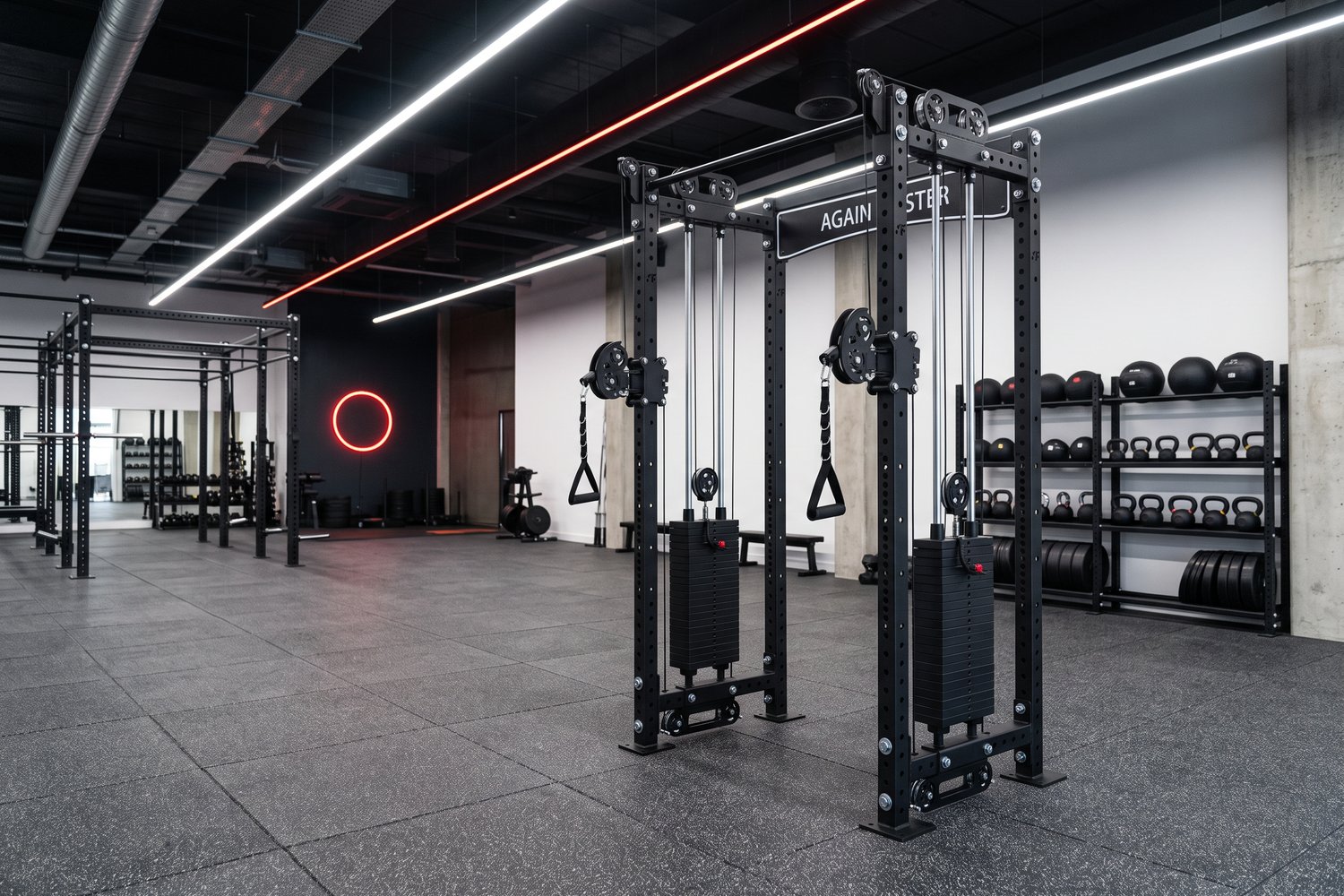
All three use 60 x 60mm, 3mm steel uprights with 17mm holes, so the REIGN rack accessories fit directly, and all three have a rated frame load of 250kg.
How the 2:1 stacks work
Each stack is 20 x 4.5kg plates, so 90kg on the pin. The 2:1 ratio halves that at the handle: 45kg with the full stack, in 2.25kg steps. It feels lighter than the number on the pin, but the small jumps make it easier to progress lateral raises, single-arm rows and rehab work, and the longer cable travel suits flyes and woodchops. The two stacks are independent, so a stronger side cannot take over.
Which one should you buy?
- Functional Trainer Power Rack if you want a rack and cables in the smallest freestanding footprint and do not mind moving your bench when you switch to cables.
- Rear Functional Trainer Rack if you are building one complete setup, want a lat pulldown and spotter straps, and have around 1.5m of depth plus working space. It also suits PT studios.
- Wall-Mounted Cable Rack if you already have a rack and bench, your room is tight, and you have a solid masonry or concrete wall.
Will it fit your space?
Floor space
The footprint is only the start. You also need room to load plates, walk a bar out, roll a bench in and out, and stand in a split stance for flyes. On the Functional Trainer Power Rack you do your cable work in the same area you lift in. The Rear rack is close to 700mm deeper, but you can leave a bench set up and still use the cables. The Wall rack sits against the wall and leaves the middle of the room free.
Draw your room to size and drop the racks in with our free 3D gym planner.
Ceiling height
- Measure floor to ceiling where the rack will stand. Check for beams, lights and garage door tracks.
- Subtract the rack height: 2153mm, or 2210mm to the top pulleys on the Functional Trainer Power Rack.
- For pull-ups, your head has to clear the bar: most people need around 30cm.
A 2.4m ceiling over a 2153mm frame leaves about 25cm. That is enough to fit the rack and use the cables, but tight for full pull-ups.
Floor and wall
- The two freestanding racks must be bolted to a solid floor. A ground floor on a concrete slab is best. For an upstairs room or a timber floor, have a structural engineer check it first.
- The Wall rack needs solid masonry or concrete and M10 x 100mm anchor bolts. It is not suitable for stud or plasterboard walls, and we recommend professional installation.
- Garage floors often slope towards the door. Set the frame level and square before you bolt it down, and if you are laying rubber gym flooring, plan how the bolts go through it.
Delivery, assembly and what to add
All three arrive on a pallet for home assembly, with the weight plates packed separately. The Rear rack comes in 19 boxes (around 480kg, longest box about 2.2m) and the Wall rack in 12 boxes (around 327kg). Check the route from the kerb to the room and plan for two people to build the frame.
- Functional Trainer Power Rack: comes with J-cups and a 32mm pull-up bar. Add cable attachments, a bench and spotter arms in the Build Your Package options.
- Rear rack: comes with a multi-grip pull-up bar, J-hooks, spotter straps and floor bolts. Add D-handles, a lat bar and a rope.
- Wall rack: comes with one cable handle. Add anchor bolts, a second handle and a rope.
Weight stack or plate-loaded?
A weight stack changes weight with a pin in seconds, which makes supersets, drop sets and PT sessions quick. A plate-loaded pulley costs less and uses the plates you own, but you load and unload for every change.
| Option | Resistance | Space |
|---|---|---|
| Cable Weight Stack Tower | 1 x 95kg stack, 2:1 | 720 x 725mm, must be bolted down |
| Cable Pulley Tower | Plate loaded, max cable load 115kg | 720 x 725mm, bolt to floor or wall |
| Evolution Lat/Row Cable Pulley | Plate loaded, max 90kg | Adds about 43cm to an Evolution rack |
See the full range in cable and pulley machines.
Looking after your cable rack
- Fix it first. Never use the rack before it is bolted down or fixed to the wall.
- Lock the pulleys. Check each carriage pin is fully engaged before you load a cable.
- Keep the bar path clear. On the Functional Trainer Power Rack, move the pulley carriages out of the way before you bench or squat.
- Pull in line with the pulley, and lower the stack under control.
- Check the cables for cracks, fraying or kinks. If you find any, stop using that cable and contact us.
- Keep it clean and follow the lubrication advice in your manual. Re-check the bolts after a few weeks, then every few months.
The new racks carry a 2-year warranty. Full terms are on our warranty page.
FAQs
Is a rack with built-in cables better than a separate rack and cable machine?
It saves floor space and makes supersets easier. Two machines only make sense if two people regularly need the rack and cables at the same time.
Is 45kg at the handle enough?
For isolation, single-arm and accessory work, yes for most lifters. If you want very heavy rows or pulldowns, compare what you lift now with 45kg per handle.
Can the Wall-Mounted Cable Rack go on a plasterboard wall?
No. It must be fixed to solid masonry or concrete with M10 x 100mm anchor bolts.
Do the racks come with cable attachments?
The Wall rack comes with one handle. The Rear rack does not include cable attachments. Standard clip-on attachments fit all three.
Planning a home gym or studio?
Lay out your room with our free 3D gym planner. Fitting out a studio or facility? Our gym design team has designed more than 250 gyms across the UK and can plan the space around your floor plan, clients and budget.
For ideas once it is set up, read our best power rack exercises or the small home gym setup guide.