


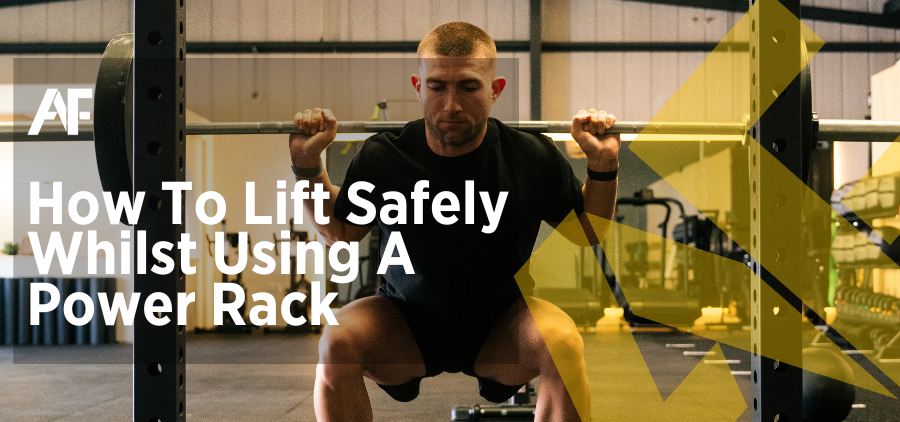
A power rack is a fundamental piece of gym equipment, especially for anyone focused on lifting heavier weights and aiming for progressive overload to build muscle mass effectively.
They’re built to support a wide range of some of the toughest lifting exercises for trainers, and provide the framework to conduct those lifts in as safe a way as possible. But spotter arms can only do so much - you need to know how to lift safely using your power rack before you strap on your lifting gloves.
So, here’s a handy guide on how to lift safely using a power rack and maximise its features to support your training journey.
Let’s dive right in.
1. Setting Up Properly
One of the first steps to safe lifting with a power rack is ensuring you set up correctly for each exercise. Adjustable safety bars, or spotter arms, are a signature feature of power racks, designed to catch the barbell if you fail a lift. Adjust these bars to the appropriate height for your body and exercise; they should be just below your full range of motion so that they catch the bar if needed but do not interfere with your movement. For exercises like squats, ensure the spotter arms are set slightly below your lowest point to allow a complete squat without restriction but offer reliable protection if you need to bail.2. Using J-Hooks to Position the Barbell
Most power racks come with J-hooks or bar catches that hold the barbell securely at your starting position. Ensure these are set at an appropriate height where you can comfortably unrack and re-rack the barbell without stretching or straining. For bench presses, the J-hooks should be set so that you can unrack the bar at arm’s length without losing stability. For squats, the bar should be positioned just below shoulder height, allowing you to step out into your squat position without overextending.3. Engaging the Safety Bars for Solo Training
When lifting solo, the safety bars or spotter arms are essential to your safety. Before starting your set, check that the safety bars are locked in place at the correct height. For bench presses, these bars should be set so that if you need to lower the bar unexpectedly, it will rest on the bars without putting pressure on your chest. For squats, they should be set to catch the bar at the bottom of your movement, allowing you to step out if you need to bail. Get into the habit of checking the safety bars before each new set as routine. One skipped check might be the time you really need those safety bars in play, and they might not be where they need to be.4. Perfecting Your Form
Using a power rack is not just about the physical structure; it’s also an opportunity to improve your form. Power racks provide a stable environment where you can practice and perfect movements like squats, deadlifts, and bench presses without the distractions of other gym-goers or fear of failure. When setting up, take the time to align your body and equipment precisely—ensure your feet, back, and bar positioning are correct for each movement. The power rack’s structure makes it easier to practise form safely, offering you the chance to focus on your technique without the risk of dropping the bar.5. Taking Advantage of Additional Features
Power racks are versatile and not limited to standard lifting exercises. Many racks have attachments or features that allow for a broader range of exercises. For example, pull-up bars are often integrated into the frame, letting you perform pull-ups and chin-ups for upper body strength. Resistance band pegs are another feature commonly found in high-quality racks, allowing you to add resistance bands for variable resistance training. You can even attach dip bars or incorporate bodyweight exercises to add variety to your routine.Why Invest in a Power Rack from Again Faster?
If you’re considering a power rack, here at Again Faster we offer a range that combines elite-level performance with accessible functionality. Trusted by professional athletes, our power racks provide unparalleled support, safety, and durability.- Rival Power Rack: Appreciated for its space-efficient design, this rack offers high-quality construction and essential safety features, making it an excellent choice for both beginners and experienced lifters. With its adjustable components and robust safety bars, the Rival Power Rack allows you to safely progress in your training, especially if you’re lifting alone.
- Competition Power Rack: Built to withstand the toughest workouts, the Competition Power Rack offers a highly durable frame and superior weight capacity, catering to athletes who push their limits. The stability and safety features of this rack are designed to handle professional-grade use, making it a trusted choice for those serious about their lifting journey. Our Competition Power Rack is fully customisable - build your perfect power rack!