Squats are one of the best exercises for any weight training programme. Whether you're just getting into fitness or you're an experienced lifter, squats will form an important part of your training.
But how much should you be able to squat? What's a good benchmark to aim for? Everyone is different, but there are some useful rules of thumb that help you set targets you can actually hit.
Quick answer
As a rule of thumb, beginners can aim to squat around half to one times their bodyweight, intermediate lifters one to one and a half times, and advanced lifters one and a half times or more. So an 80 kg lifter might aim for 40 to 80 kg as a beginner and 80 to 120 kg as an intermediate. Age, sex, training history and mobility all shift these numbers, so compare yourself with your own progress first.
Updated November 2026
How Much You Should Be Aiming to Squat
These targets are based on general guidance from Men's Health and are a sensible starting point for most lifters:
| Level | Target (x bodyweight) | 60 kg lifter | 80 kg lifter | 100 kg lifter |
|---|---|---|---|---|
| Beginner | 0.5 to 1.0 | 30 to 60 kg | 40 to 80 kg | 50 to 100 kg |
| Intermediate | 1.0 to 1.5 | 60 to 90 kg | 80 to 120 kg | 100 to 150 kg |
| Advanced | 1.5+ | 90 kg+ | 120 kg+ | 150 kg+ |
Targets are for a one-rep max back squat to at least parallel, with good form. They're rules of thumb, not formal standards.
Beginners
If you're new to squatting, a good first goal is to squat around half your bodyweight with good form, then build towards your full bodyweight over time. This develops the foundation of strength and technique that heavier lifting depends on.
Intermediates
With consistent training, intermediate lifters can aim for one to one and a half times their bodyweight. By this stage your technique should be solid enough to handle heavier loads safely.
Advanced lifters
Lifters with several years of structured training can aim for one and a half times their bodyweight or more. Competitive powerlifters often squat well over twice their bodyweight.
Factors That Affect How Much You Can Squat
Your age
Strength usually peaks somewhere between your mid-20s and mid-30s, then declines gradually as muscle mass and recovery drop. That doesn't mean you stop progressing: lifters who start in their 40s, 50s and beyond can still get much stronger. If you're older, judge yourself against your own starting point and allow more time for recovery between heavy sessions.
Your sex
On average, men carry more muscle mass and can lift more in absolute terms. Relative to bodyweight, the gap is smaller, and the targets in the table above are a reasonable guide for anyone.
Your bodyweight, health and mobility
Heavier lifters with more muscle can usually lift more in absolute terms, which is why bodyweight multiples are a fairer comparison. Good ankle, hip and upper-back mobility lets you reach depth safely. If pain or stiffness limits your squat, work on that before chasing heavier weights.
Your experience
Beginners often get stronger quickly as they learn the movement. Progress slows as you become more experienced, so intermediate and advanced lifters need more structured programming to keep improving.
How to Improve Your Squat
Progress gradually
Add weight in small steps and only when you can complete all your sets with good form. Small, steady increases over weeks and months are what build strength.
Eat and recover well
Eat enough protein and total calories to support training, stay hydrated and get plenty of sleep. Strength gains happen during recovery, not just in the gym.
Train safely with the right equipment
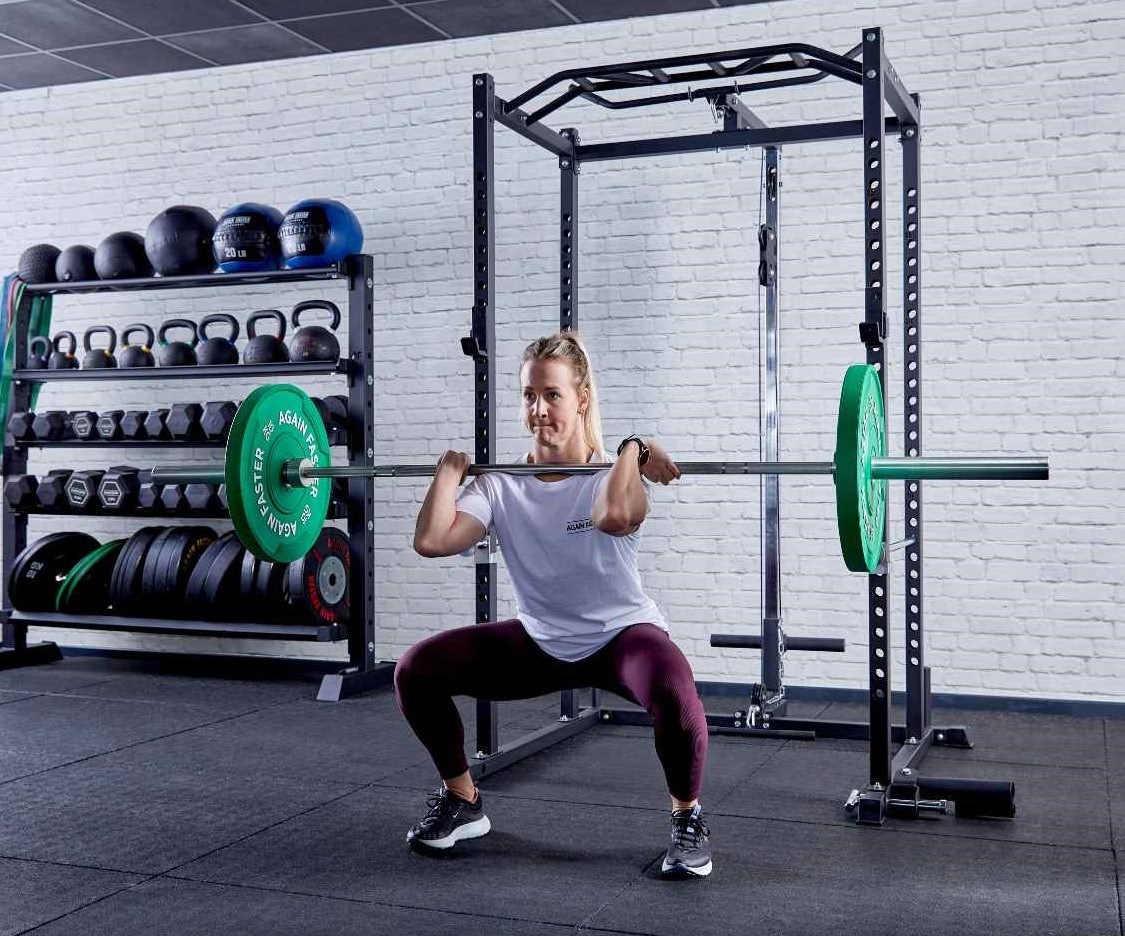
Squat inside a power rack or between squat stands with the safety arms set just below the bottom of your squat, so you can fail a rep safely when you train alone. A good barbell and bumper plates make it easy to load in small jumps.
How much should you squat: FAQs
Is squatting your bodyweight good?
Yes. Squatting your bodyweight for a single rep with good form is a solid milestone, and it marks the move from beginner to intermediate for most lifters.
How much should a 50-year-old be able to squat?
There's no fixed number. If you're new to lifting, aim for half your bodyweight first, then build towards your bodyweight. Experienced older lifters can often still squat one to one and a half times their bodyweight.
How much should a woman be able to squat?
Use the same bodyweight multiples as a guide. Many women reach a bodyweight squat within their first year or two of consistent training.
How deep should you squat?
Aim for your hip crease to reach at least the level of your knees (parallel), as long as you can keep a neutral back and your heels down.
Happy lifting!
Shop the equipment in this article: squat racks and stands, power racks, Olympic barbells and bumper plates.